
How to Find Castle Rock Residents
Finding people in a small county seat rewards a little planning. Castle Rock anchors Douglas County's records network. The Castle Rock residents directory works as a chain of stops rather than one box. Start at the assessor. Its parcel search turns a name or street into an account number, legal description, and sale history. Take those keys to the recorder. The document index there unlocks deeds and scanned images reaching back to the county's earliest books. When the trail runs cold, the Miller library's local history room holds phone books, obituaries, and house files. You can also find who lives on a street in Castle Rock. Just pair parcel rolls with voter records. Assessor first, recorder second, library for everything older.
- Start with the Douglas County Assessor by owner name, account, parcel, or address.
- Use the Colorado voter lookup only when a registration question fits the request and the identifying details are known.
- Convert the address to a parcel or legal description before searching the recorder's grantor and grantee index.
- For a past household, check dated Castle Rock newspapers, phone books, directories, probate, or naturalization records.
- When the portal stops, contact the named custodian through Colorado's open-records route, a form, mail, or an office research station.
Castle Rock Records Offices for Residents
Castle Rock is the Douglas County seat, and that keeps most custodians within a few blocks. The Clerk and Recorder's Recording Division at 301 Wilcox Street holds the recorded instruments. The Assessor next door supplies parcel and valuation context. Douglas County Elections sits at 125 Stephanie Place. The Town Clerk at 100 N. Wilcox Street keeps Town administrative records and routes CORA requests through the Town Open Records Center, while a county court case belongs at the Combined Court on 4000 Justice Way, not with the recorder or assessor.
Each office answers a different question. A deed names the parties to a recorded instrument. A parcel card gives the account and legal description. An election file reflects an eligible registration, minus statutory exclusions, and a Town permit can name an applicant or owner on a dated project. The office, the field, and the date matter more than the word directory.
The Assessor Fields Behind Castle Rock Searches
The Douglas County Assessor basic search narrows by all fields. It also works with address/city/ZIP, owner name, account number, or state parcel number. The example on screen invites a street line or a name. Results sort by Best Match, Account, Owner, or Address. The advanced search goes much deeper. It layers in owner, value, neighborhood, year built, sale date, deed type, grantor, grantee, subdivision, block, lot, and tract. Tax authority, street number, city, ZIP Code, township, section, range, land use, land attribute, and acres round out the field list. Together they cover a Castle Rock property-records search.
| Search field | Use in a Castle Rock resident search |
|---|---|
| Owner Name | Finds the displayed owner field, which may be a person, trust, company, or estate. |
| Address, City, and ZIP Code | Narrows the parcel search, but a postal city is not the same as Town limits. |
| State Parcel Number | Creates the stable crosswalk to the map, Treasurer, and recorded-document links. |
| Grantor, Grantee, Deed Type | Helps find a dated transfer in the advanced property search before opening Landmark Web. |
| Subdivision, Block, Lot, Tract | Supplies the legal-description clues the recorder uses instead of a street address. |
- Roll
- A government list built for a defined purpose, such as registration or taxation, rather than every person at an address.
- Index
- A finding aid for records. An index entry can point to an image or file without being the full document.
- Parcel
- A mapped property unit identified by a county account or state parcel number.
- Criss-cross directory
- An address-to-name or name-to-address directory, usually historical and dependent on the library's actual coverage.
Note: The assessor warrants neither accuracy nor completeness, so quote the account, parcel, and date you checked. A mailing address can differ from the situs address. Treat it as a tax-contact field, never a residence claim.
Castle Rock Parcel Trails and Deed Records
Landmark Web offers name, document, book and page, consideration, record-date, reception or instrument, legal, quick, and marriage search paths. Names appear as “Last Name, First Name,” and company names should be entered as shown on the document. The county says a street address is not the recorder's indexing key. Start with the assessor's legal description, subdivision, lot, block, tract, grantor, or grantee. Pre-2002 reception-number searches use “Contains,” and some historic images remain at county research stations even though chronological material reaches back into the 1800s.
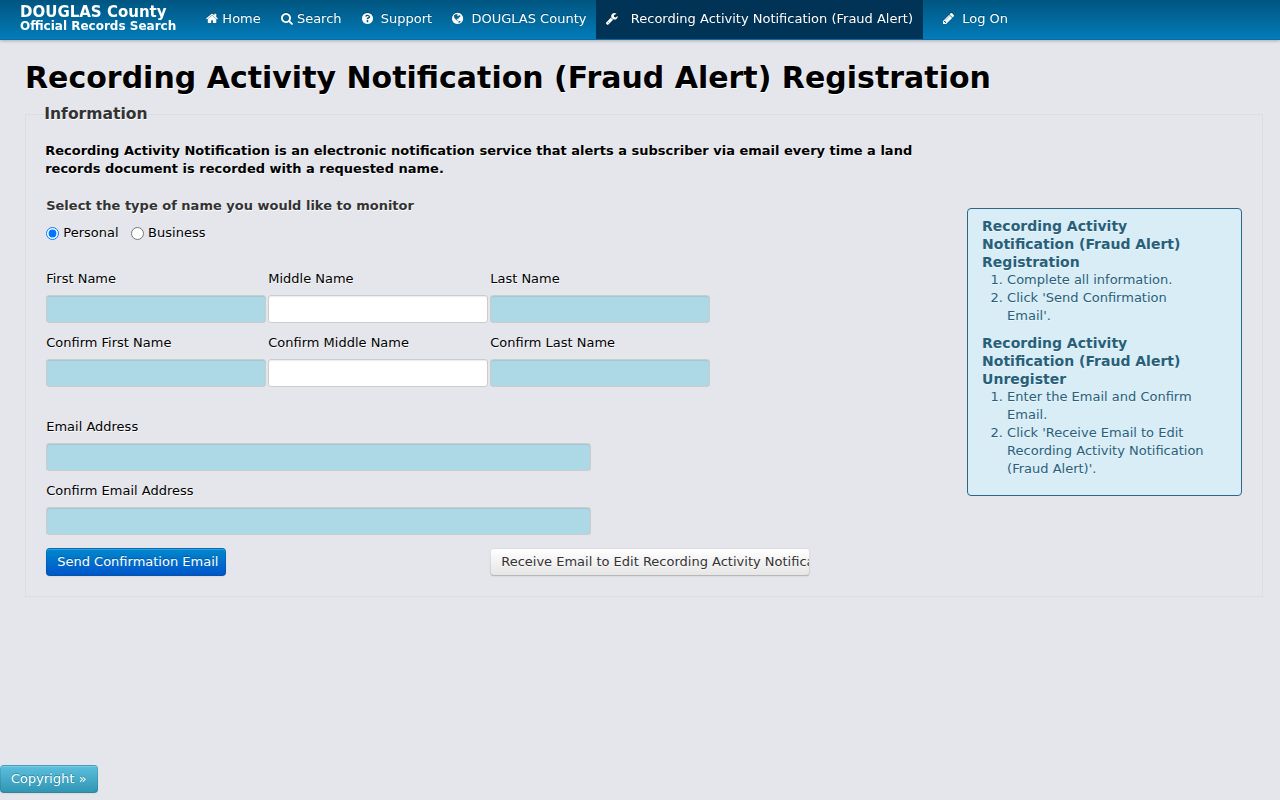
Recorded instruments show a legal transfer, lien, release, plat, or other filing. They do not establish occupancy. The office lists $43 for most common recorded documents, $0.25 per printed page, and $1 for certification; confirm the current fee before ordering. A free Recording Activity Notification can alert a registered name when a matching document is recorded.
A street-by-street search becomes more reliable when the assessor parcel, the recorder instrument, and a second dated source agree. The full address chain belongs on the Castle Rock street directory, where parcel, GIS, permit, and historical address work can be kept together.
Colorado Voter Records for Castle Rock Addresses
Colorado keeps its voter records narrower in scope than a residents directory. The state's self-lookup asks for a first name, last name, ZIP Code, and birthday in MM/DD/YYYY form. It exists so a voter can check registration and election details. Voter-file products can hold residence and mailing fields. Precincts, districts, status dates, and participation fields appear too. Confidential voters stay out. Preregistered minors stay out too. Social Security numbers, state-ID numbers, electronic signatures, email addresses, and ballot choices are all excluded.
Douglas County updates its standard list every business day. The master voter-history list follows each election. The Secretary of State's request form offers individual reports and subscriptions, with the published 2025-26 schedule listing $50 for an individual report and $1,000 for a subscription. Treat a voter record as a dated registration snapshot. It is not a complete household list. The controlling split between public and confidential fields sits in C.R.S. §1-2-227 and C.R.S. §1-2-302(8). Colorado's Address Confidentiality Program gives qualifying survivors a substitute address, and a normal address lookup should never be used to work around that protection.
Current Castle Rock Resident Sources
A Castle Rock residents directory built from current sources is really a set of dated public views. The parcel source is strongest for ownership and location. Landmark Web is strongest for recorded instruments. Voter rolls suit registration status, while Town permits and state registries add role-based clues that should never be promoted into a complete resident roll.
| Source | Who It Lists | Keeper | Access |
|---|---|---|---|
| Assessor parcel search | Displayed owner, account, situs, legal description, value | Douglas County Assessor | Public web search |
| Voter lookup and lists | Eligible registration, residence/mailing, district fields | Colorado and Douglas Elections | Self-lookup or request |
| Landmark Web | Parties to deeds, liens, plats, releases | Clerk and Recorder | Index, image, station |
| Town eTRAKiT | Permit applicant/owner, contractor, inspection event | Castle Rock | Portal or request |
| SOS and DORA registries | Entity filings and professional credentials | Colorado agencies | Public role record |
Start with the narrowest source. Then verify against a separate dated custodian. A permit applicant is not necessarily the occupant, and a registered agent is not necessarily a home address. A voter list omits eligible people who never registered, and these distinctions keep a current residents directory useful without overstating what any single row proves.
| Source type | Strength | Limit |
|---|---|---|
| Official parcel, court, voter, or archive record | Named custodian, dated fields, and a route for correction or copies | Purpose-specific, incomplete, and sometimes restricted |
| Commercial compiled search category | May combine public fragments into a quick lead | Source joins can be stale or hard to audit; verify with the original custodian |
| Personal conclusion | Can be useful when two independent records agree | Must keep the date, source field, and uncertainty visible |
Colorado Name Leads With Narrow Purpose
Two state tools can hand you a name lead, but neither works as a Castle Rock residents directory. The CBI's Sex Offender Registry requires an agreement first. The state warns that the public list is incomplete. It updates hourly and carries identity and location limits. The Great Colorado Payback search covers people, businesses, and organizations with unclaimed property. A match there is a claim lead. It does not prove the apparent owner lives in Castle Rock today. Preserve the checked date for either source. Use the official claim or registry process, never publish supporting identity documents, and never assume a match is the same person or treat a statutory public-safety list as an all-purpose address source. The Colorado registry agreement describes the scope and warning before a search begins.
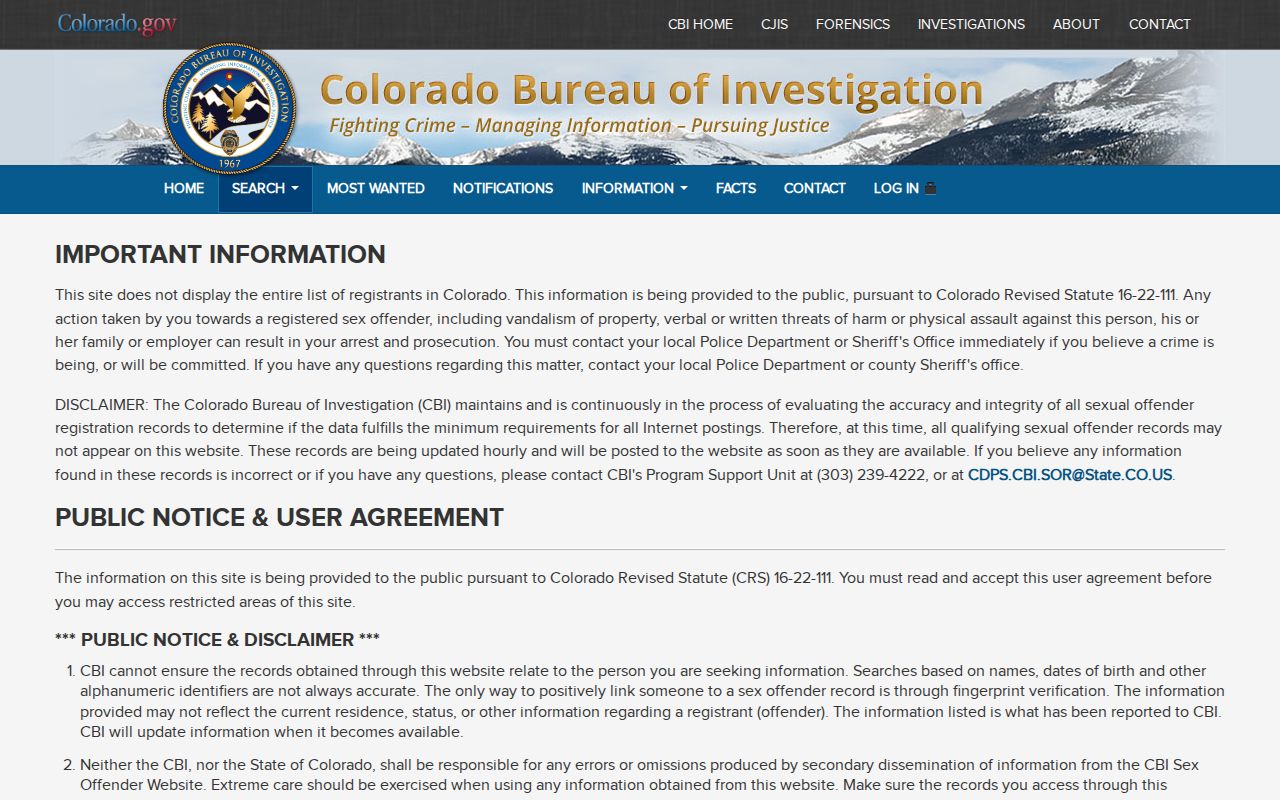
The Great Colorado Payback search is a separate route for a possible unclaimed-property match.

Both tools answer one narrow question. A parcel, court, or archival record is still needed to anchor a place or a historical connection in Castle Rock.
Castle Rock Court and Vital Records
A name can surface in a public docket without yielding a full biographical record. Douglas County Combined Court's docket search is deep. Filters cover judicial district, county, courthouse, court type, division, date, case year, class, sequence, party type, and attorney name or bar number. Result cards show hearing date and time, party, case number, hearing type, location, appearance type, and courtroom. Pleadings, exhibits, dispositions, and protected case types may require a request to the court at 4000 Justice Way. Castle Rock Municipal Court is separate. It uses a form at 100 Perry Street.
Birth and death certificates come through the Douglas County Health Department or CDPHE. Marriage applications belong to the Clerk and Recorder. Divorce files belong to the court. Colorado vital records are confidential under C.R.S. §25-2-117. The local birth and death route lists $25 for the first copy and $20 for each additional copy ordered together, with ID and eligibility details. A statewide order can take longer. The state publishes no unrestricted current vital-record name index. For a one-person search, every result is a lead to verify rather than a profile to assemble, and the issuing office controls eligibility, redaction, copies, and correction.
Castle Rock Town Records by Request
The Town Clerk is custodian of administrative, operational, historical, and legal Town records. Castle Rock's Open Records Center requires an account. It supports correspondence, secure payment, and downloads. The Town describes a typical CORA response within three business days. A seven-business-day extension is possible. Research and retrieval charges begin after one hour at the posted $41.37 hourly rate. Email requests are not honored under Town policy. Criminal-justice material belongs with the Police Records Division.
A useful request names the date range and street or parcel. It should also list the record type, possible custodian, and desired format. CORA does not require agencies to create new records. Nor must an agency explain a record that does not exist. That same limit helps when a residents directory question concerns a permit, neighborhood boundary, Town court, or public notice. It applies rather than a name-indexed roll. The Town's records workflow is distinct from the county recorder's index. Keep the two jurisdictions separate. A Castle Rock postal address can fall outside Town limits. The Castle Rock Open Records workflow shows why a request needs a named custodian and a clear scope before submission.
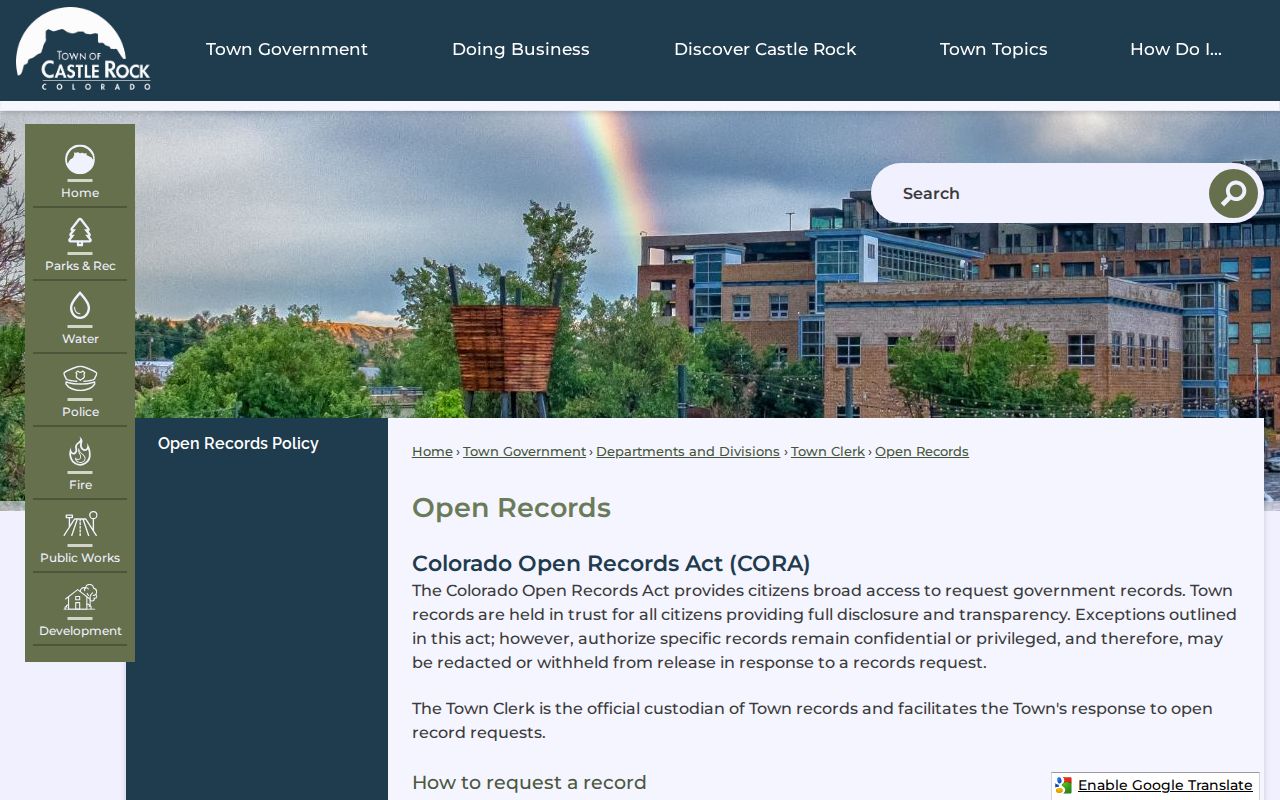
The request center is a fallback when no portal exposes the Town record you need. It never turns a request into an unrestricted household search.
Castle Rock Business and License Records
Colorado keeps its business registry with the Secretary of State. The database searches a business name, trademark, trade name, ID, or document number. A filing can reveal entity status, the registered office or agent, filing history, addresses, officers, managers, and trade-name links where they were filed. One caution comes from the state itself. The registry is a filing system, so it does not certify that a business operates legally. A filing is evidence of a public business role. For a Castle Rock residents directory, never treat it as proof of where someone lives.
Colorado's DORA runs a separate Web Lookup and Verification form. The fields cover profession, first and middle name, license type, last name, license number, and license status. An asterisk wildcard is accepted. Results vary by profession. They may include status, issue or expiration details, discipline, and public contact fields. Locally, Castle Rock's business license page lists a $10 application charge and at least two weeks of processing. Liquor licensing runs through the Town Clerk and the state Department of Revenue. These are role and premises records, not resident records.
The state filing search is described in the Colorado business database. An entity identifier works better there than a common name alone. Many businesses share names across the state.
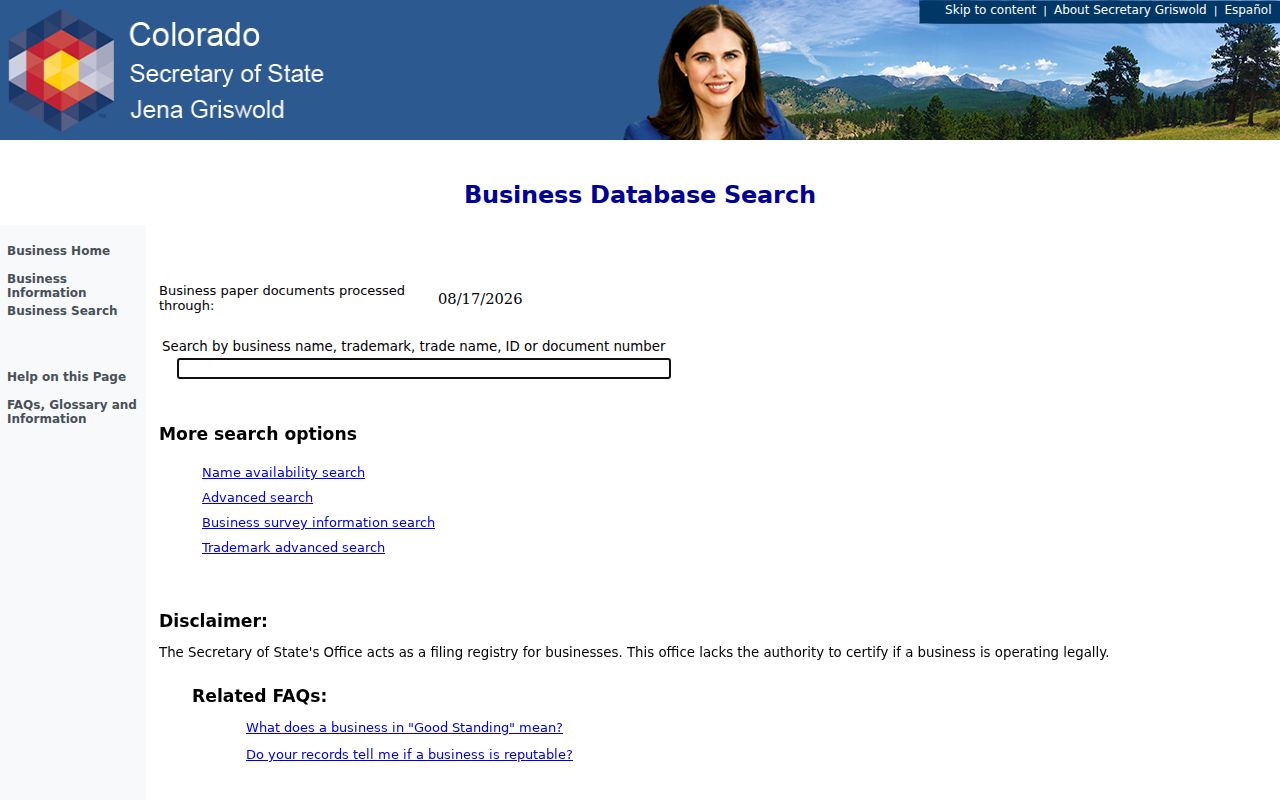
A state filing can anchor a Castle Rock name to a date. A filing address and a parcel address are different kinds of evidence. Confusing the two leads neighbors astray.
Professional verification helps when the clue is a public credential rather than a street. Search less before searching more. Choose the profession first. Add a partial first or last name, then narrow with license type, number, or status. The DORA result is a credential record. It does not establish that a person currently practices at any Castle Rock address. The landing page does not state a complete historical coverage period.
The public lookup form is displayed by the Colorado license verification portal. Its value in a residents directory is clean. It separates a public role from a residential claim.
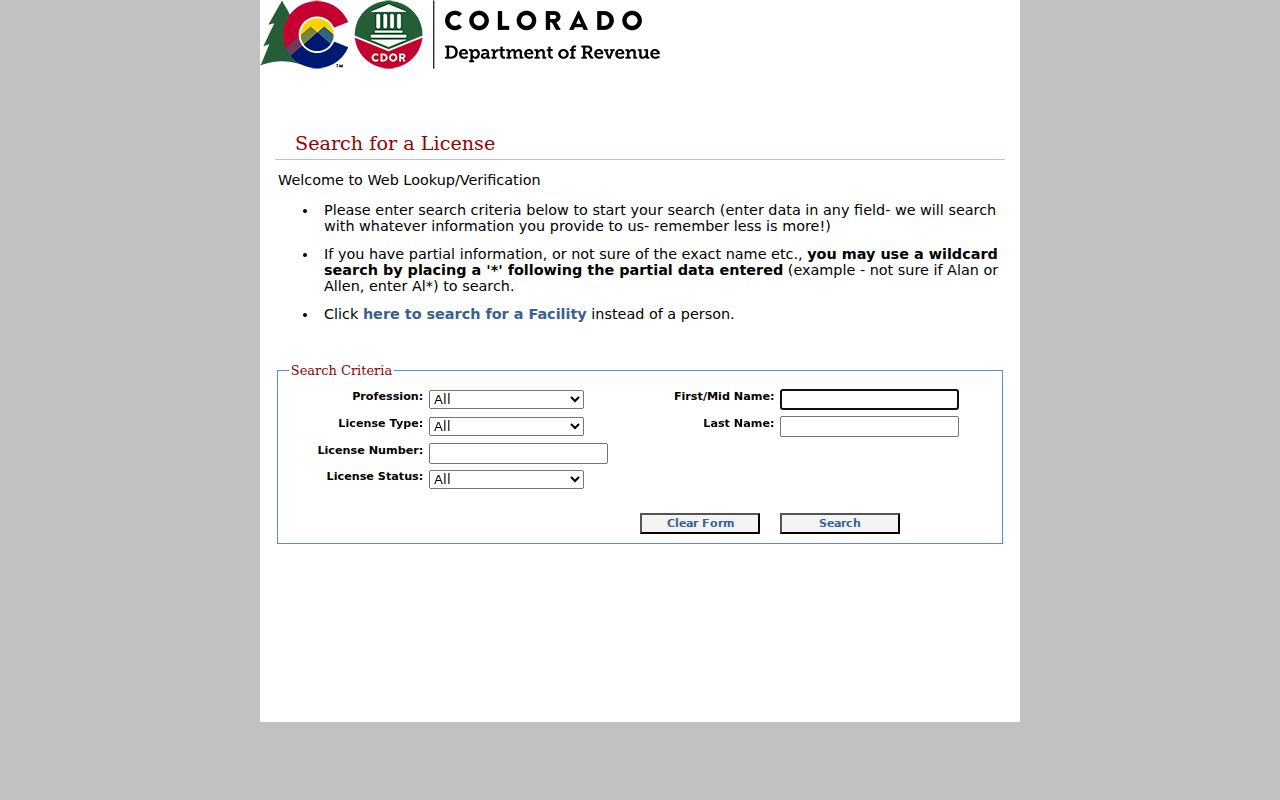
Note the checked date and credential fields beside any match. Never merge a licensee with an owner, voter, or permit applicant without a separate source connection.
Colorado Criminal History Has Limits
The Colorado Bureau of Investigation runs a separate state route. Its Internet Criminal History Check returns a Colorado-only, name-based history. The public fee is $6 per result viewed. A manual or notarized request costs $13. The result comes from fingerprint submissions. It can omit tickets, summonses, records held elsewhere, sealed arrests, juvenile arrests unless adjudicated as an adult, and traffic arrests under age 16. An arrest is not a disposition.
The scope stays narrow for a reason. A state name result and a Douglas County docket answer different questions. CBI's records overview gives the state route. A specific case belongs with the court. An incident report belongs with the agency that created it. Label a search result as criminal-history information. Do not treat it as a complete Castle Rock residents directory.
The CBI records overview page presents the state program and its published limits.
That narrow scope is the useful fact here. A Castle Rock street question rarely gets its answer from a state criminal-history file.
Douglas County Elections publishes the office route. It also publishes field guides for standard voter lists, voter history, and voters-with-ballots files. The county separates residence and mailing address. It tracks registration lifecycle, precinct and district assignment, contact exclusions, and participation fields. A master history file is produced after each election. The standard list is updated every business day. The result is a public administration record with a date and statutory exclusions, not a full list of people at every address.
For current list products, the request path, and confidential-record rules, the county office can explain directly. Visit 125 Stephanie Place. The Colorado self-lookup remains the right first step for a person confirming their own registration. The Douglas County Elections page identifies the local office and its public records route.
Keep the election file's effective date beside any address or district field, especially near a municipal boundary.
Castle Rock's Town Clerk Trail
The Town Clerk serves as a key local custodian. The office holds permanent Town records, runs election administration, and handles liquor licensing. It also posts public notices and manages records requests. Lisa Anderson is listed at 303-660-1394, and Records Manager Robbie Schonher at 720-733-2229, both at 100 N. Wilcox Street. A Town request must go through the Town's Open Records Center account rather than an informal email. It can be scoped to a date, address, permit, meeting, notice, or department.
This custodian matters for a simple reason. A postal Castle Rock address can sit outside the Town boundary entirely. Confirm whether a record is Town, county, or state. Then interpret any person or address match. The Castle Rock Town Clerk record page supplies that local custodian context.
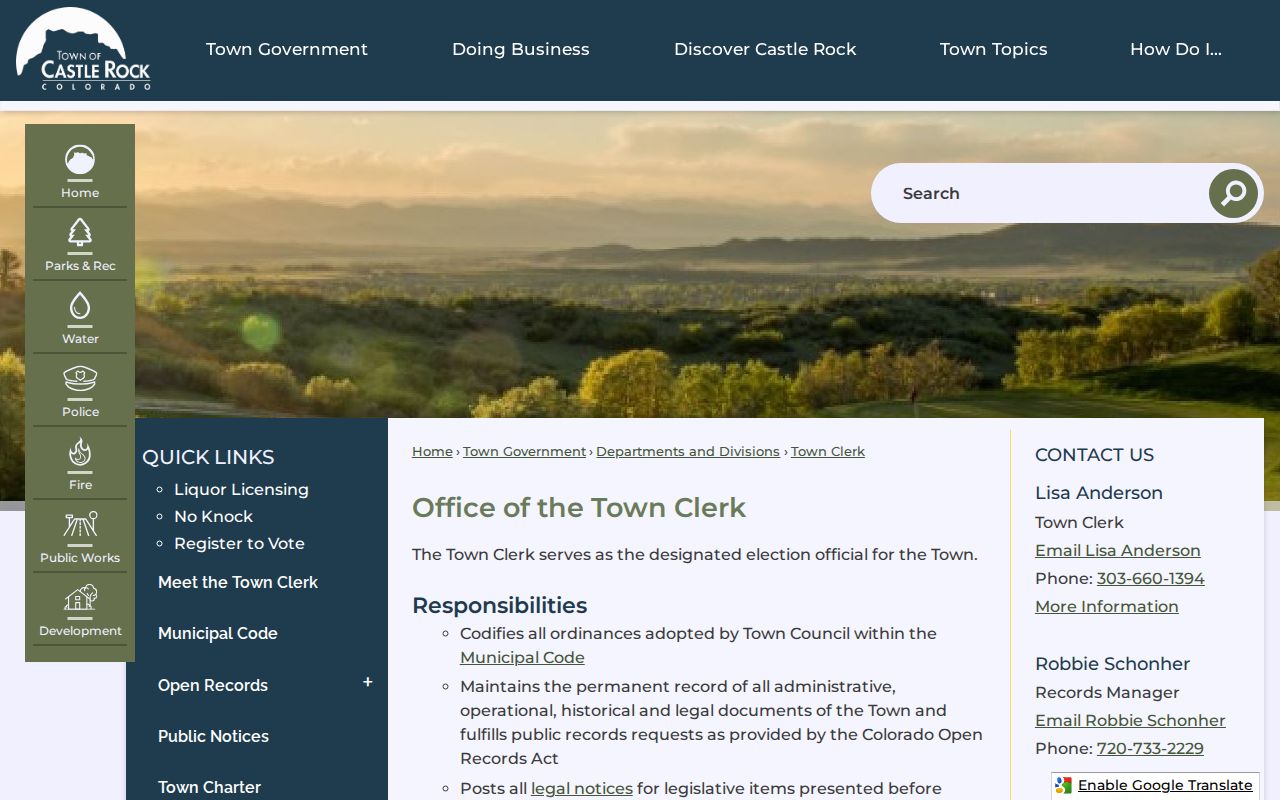
The Town Clerk route complements, but does not replace, county land and court records.
Douglas County Recording is open Monday through Friday from 8 a.m. to 5 p.m. at 301 Wilcox Street. Its online index is available around the clock, while research stations provide index books and historic image access. The office recommends beginning with the Assessor and using the resulting legal description or party names in Landmark Web. This is the core chain for recorded deeds, mortgages, liens, plats, public notices, and releases.
The county's recording page also describes copies, certifications, and the research-station fallback. The history is deep, but one clean online-index cutoff was not stated. A missing online image can mean incomplete metadata, a historic gap, or a record that must be viewed at the station.
The Douglas County Recording Division page is the office source for hours and access.
Treat the image and instrument number as a record trail. That trail proves a filing, not who lives in a house today.
Historical Castle Rock Resident Directories
The historical Castle Rock residents directory trail runs through the Philip and Jerry Miller Library's Archives & Local History room rather than one tidy online list. DCL identifies the Castle Rock Journal from 1881-1908, the Record-Journal from 1908-1952, and the Douglas County News from 1952-1966, with gaps across much of 1952-1964 and a digital run that ends in mid-1966. Local phone books from 1966-1973 cover a later stretch. A dated directory or newspaper can yield a name, role, phone, or address clue, but treat it as a snapshot of one moment.
The Miller Library's local-history service operates from 100 S. Wilcox Street. Its roughly 1,000 linear feet of archival material and 4,000 rare books hold newspapers, yearbooks, obituaries, maps, cemetery material, church and school collections, business records, and photographs. The 1886-1888 Castle Rock Journal business and government directory lists public roles such as commissioner, trustee, telegraph operator, street and water commissioner, and mayor. The full historical workflow lives on the Castle Rock city directory page.
One caution applies. A database entry may describe a box, folder, scrapbook, or item instead of a searchable scan, so ask for the issue, page, box, or item identifier and keep the original wording before mapping an old street onto a modern parcel.
Castle Rock's 1886 Directory Window
The 1886-1888 Douglas County business and government material earns its local fame by one habit. It names people by town and by public or business role. DCL's guide records Castle Rock Journal issues dated February 7 and 24, October 13, and December 15, 1886. It also lists May 2, 1888. Towns named include Acequia, Castle Rock, Fonder, Franktown, Greenland, Larkspur, Parker, Sedalia, and Spring Valley. These entries are not a household census. They can anchor a newspaper search, point toward a town officer or business, and date a later property or probate search.
A strong connection rests on three anchors. One is a dated directory or newspaper item. Another is an independent property, court, or archive record. The third is a geographic crosswalk that preserves the historic street wording. The 1874 county-seat move, the 1875 railroad depot, and the 1881 incorporation explain something else. They show why early material clusters around downtown streets and public roles. Castle Rock's original central grid includes Jerry, Elbert, Wilcox, Perry, Castle, and Front. A period notice may cite only one of those streets. It may simply say "near the depot," so a map belongs in the identity work.
When a name vanishes from a modern parcel or voter source, the local newspaper run may still help. It may hold a public role, marriage notice, obituary, school activity, business change, or building clue. DCL's microfilm matters because the digital run is incomplete. The Library of Congress record adds regional context for the Castle Rock Journal, Record-Journal, Douglas County News, and later News-Press material. Issue availability must be checked, not assumed.
Keep the method narrow. Pick a date, spelling variant, street, organization, or event. Record the issue and page. Compare the notice against a deed, probate file, cemetery lead, or directory. A printed name shows a source ran it; it proves neither continuous residence nor a modern address. DCL's MyHeritage Library Edition opens census, vital, newspaper, military, immigration, cemetery, family-tree, directory, and book material through the library network. Treat database images as leads. Verify anything important with the issuing office or the original collection.
Castle Rock ZIP and Boundary Clues
Castle Rock carries four identities at once: a Town, a postal city, a county seat, and a statistical place. Its current postal-city codes are 80104, 80108, and 80109, while nearby ZIPs serve Franktown, Kiowa and Elbert, Larkspur, and Sedalia. For an individual delivery line, USPS ZIP4 holds the answer. Boundary questions split across custodians, with the Assessor, the Town annexation page, the neighborhood map, election districts, and the court system each answering a different one.
The 2020 Census counted 73,158 people in Castle Rock, against 48,231 in 2010, with a July 1, 2025 estimate of 83,815. Those numbers describe a statistical place, not a tally of addresses or the residents of one ZIP code directory entry. Preserve each source's ZIP and municipal status instead of forcing every postal result into the Town.
Historical addresses need a gentler hand. Keep the period wording, find the street or block on a map from that era, compare it against the modern parcel, and describe the ZIP only as a supported modern crosswalk. A postal label never decides which office holds a deed, court case, or Town record.
Castle Rock Privacy and Safe Use
Public access in Castle Rock has firm edges. Colorado voter rolls omit protected identifiers and confidential voters. Vital records require eligibility plus a direct or tangible interest. The Colorado Address Confidentiality Program gives qualifying survivors a substitute address. Sealed, juvenile, expunged, adoption, medical, and protected court material may stay unavailable. A missing result in any residents directory is never proof. A person may still have lived in Castle Rock.
Lawful personal use. Use Castle Rock records for family history, reconnecting, civic research, property curiosity, or a safety concern handled through the proper office. Do not publish unnecessary personal fields or use a public record to stalk, harass, threaten, or harm anyone.
The Douglas County Recording Activity Notification System works as a protective watch. It sends a matching-name alert with document details. Still, it cannot block a filing, certify ownership, or remove an instrument. Verify suspicious notices with the Recorder and keep the instrument number handy.
Scams have circulated locally. Castle Rock posted a phishing warning in March 2026. In August 2026 the Douglas Assessor flagged a fake federal property-tax form. Stick to official domains, confirm the custodian, and distrust any urgent payment request or a form demanding identifiers the real office never asks for. The Douglas recording fraud alert explains the name-monitoring route.
A solid residents directory result names three things. Name the custodian, record the date you checked, and keep the claim about what the record shows within honest limits.